
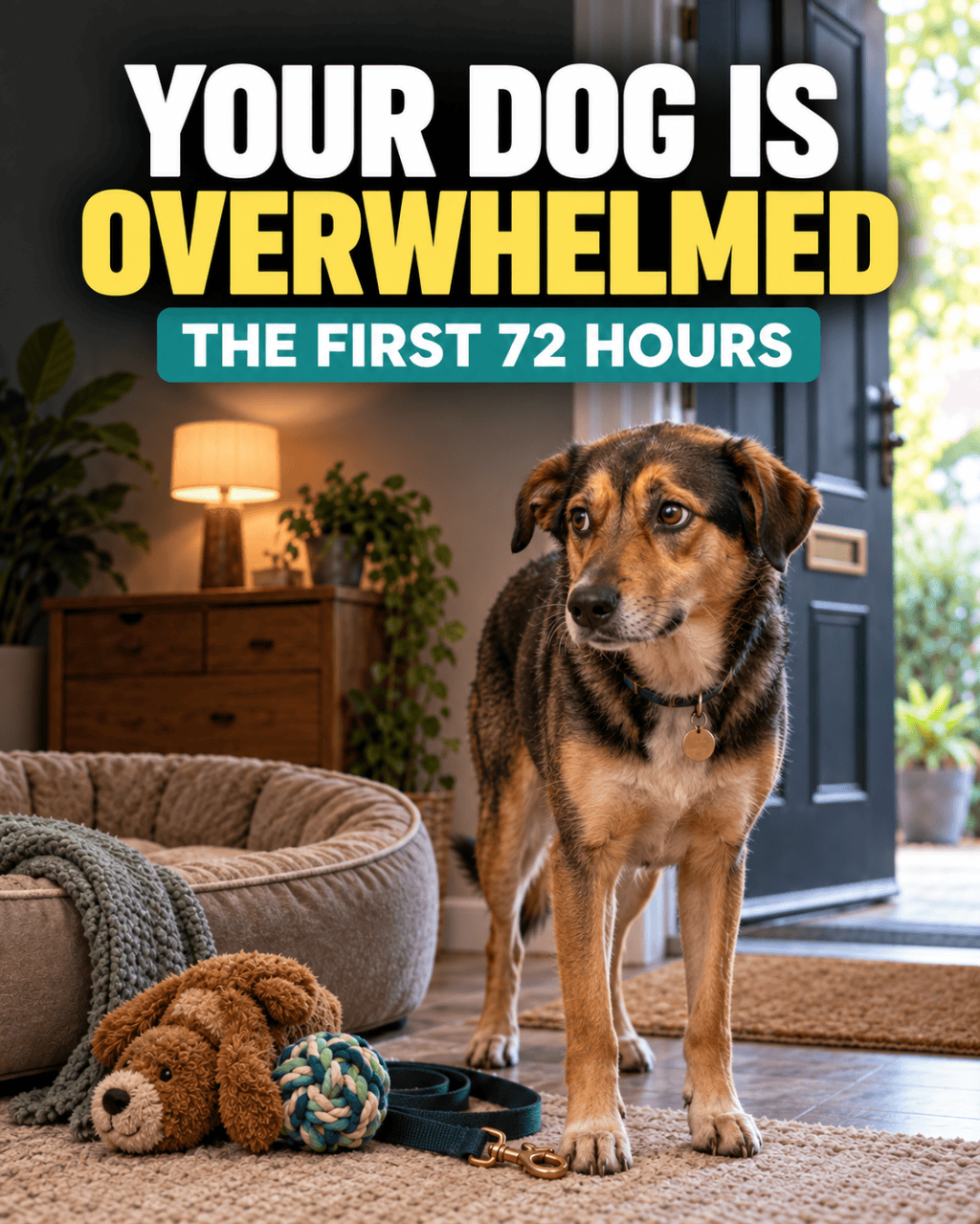
You close the front door and look down at your new dog.
Their bed is ready. Toys have been carefully chosen. Everybody is excited to welcome them into the family. You may already be picturing your first walk together, their introduction to friends and that perfect photograph of them relaxing on the sofa.
Your dog may be having a very different experience.
They have entered an unfamiliar environment filled with new smells, surfaces, sounds and people. They do not understand that this is their forever home. They only know that almost everything around them has suddenly changed.
The first 72 hours should therefore be about reducing pressure, meeting their immediate needs and helping them begin to understand how life works in their new home.
Watch the full episode of Paws and Pawsitivity here:
🎥 👉 CLICK HERE TO CATCH THE LATEST EPISODE 👈
The 72-hour period is not a deadline
Your dog will not necessarily settle within three days. The phrase “first 72 hours” gives guardians a helpful period on which to focus, but it should never become another expectation placed upon the dog.
Some dogs begin exploring almost immediately. Others remain quiet, sleep frequently, struggle to eat or stay close to one person.
A quiet dog is not automatically a settled dog. Stillness can occur for several reasons, including rest, caution, uncertainty or feeling overwhelmed. Body language should always be considered alongside the situation, the dog’s history and changes in their behaviour over time.
It may take weeks or months before you see how your dog behaves when they feel secure in their new environment.
What does decompression mean for a new dog?
Decompression means reducing unnecessary demands while your dog processes the changes around them.
It does not mean ignoring your dog or leaving them to manage alone. You remain available and responsive, but you do not expect constant interaction.
Provide a quiet resting place where your dog can sleep without being disturbed. Let them choose whether to approach you. Avoid leaning over them, hugging them or repeatedly reaching towards their head.
If your dog moves away, respect that choice.
You can gently toss a treat away from your body if they are comfortable eating. This can create a positive interaction while allowing them to maintain space. If they do not want the food, do not push it towards them. Refusing food can have several possible causes, including stress, tiredness, illness or simply not being hungry.
Keep visitors and activities to a minimum
Friends and relatives may be desperate to meet your new family member, but introductions can wait.
Several unfamiliar people entering the home may add more pressure when your dog is already processing a major change. Keep those first few days quiet and give your dog time to learn about the people who actually live with them.
Children must understand that the dog’s bed or resting area is private. They should not follow the dog, climb beside them or attempt to gain affection through constant touching.
Resident dogs should be introduced carefully using space, barriers and short supervised interactions. Remove food, chews and toys if they could create competition. Make sure each dog can move away without being followed.
They do not need to play or sleep together immediately. Calm coexistence is a perfectly acceptable beginning.
Create a predictable routine
A recognisable daily pattern can reduce uncertainty.
Keep meals, toilet opportunities and rest periods reasonably consistent. This does not require a rigid timetable. Your dog simply needs repeated experiences that help them predict what happens next.
Take them outside regularly and reward outdoor toileting. Even a previously housetrained dog may have accidents after moving home. Punishment will not teach them where you want them to go. It may teach them that toileting near you is unsafe.
Clean accidents calmly and provide more opportunities for success.
Avoid trying to tire your dog out
A long walk around the neighbourhood may sound like a wonderful welcome, but it could expose your dog to traffic, strangers, unfamiliar dogs and other challenges before they are ready.
Some dogs may enjoy a quiet sniff close to home. Others may initially cope better with brief toilet breaks and gentle exploration of the garden.
Sniffing allows dogs to gather information. Give them time rather than hurrying them from one place to another.
Exhaustion should not be mistaken for relaxation. A dog collapsing into bed after an overwhelming outing does not prove that the experience helped them feel safe.
Use secure, properly fitted equipment whenever you leave the house. A newly arrived dog may respond unexpectedly to something unfamiliar, so an additional safety attachment may be sensible.
Do not rush home-alone training
Avoid assuming that your dog can immediately cope with being left alone.
Following you around the home does not mean they are trying to control you. Staying close may be how they manage uncertainty in an unfamiliar environment.
Where possible, avoid absences that exceed what you know your dog can comfortably handle. Begin by observing whether they can remain relaxed while you move around the home. Camera monitoring should be used when you later assess genuine absences.
Allowing a dog to cry or panic does not teach independence. It exposes them to the frightening experience for longer and may make future absences more difficult.
Pay attention to health
Keep simple notes about eating, drinking, toileting, sleep and behaviour. Record what happened before any concerning response and how long your dog took to recover.
Contact a veterinary professional if your dog repeatedly vomits, has persistent diarrhoea, appears painful, cannot pass urine, refuses water or shows another worrying physical change. Adjustment should never be used to dismiss possible illness.
A quiet welcome is still a loving welcome
Your dog does not need immediate adventures, constant entertainment or introductions to everybody you know.
They need water, food, toilet opportunities, restful sleep and people who listen when they communicate.
Show them that moving away works. Let them investigate at their own pace. Give them a predictable routine and allow trust to develop through experience.
Watch the full episode here:
🎥 👉 CLICK HERE TO CATCH THE LATEST EPISODE 👈
If your dog is struggling to settle or finding it difficult to cope when left alone, I provide force-free and fear-free support through online consultations and personalised training programmes.
Book your free 15-minute discovery call at http://www.pta.dog and let us discuss how I can support you and your dog.
Or 👉 CLICK HERE TO BOOK YOUR FREE DISCOVERY CALL 👈
Please share this article and episode with anybody preparing to welcome a dog into their family. A calmer first few days can give a newly arrived dog the space they need to begin feeling safe.
If you’re ready to level up your dog’s training, hit that play button and join me for this exciting episode of Paws and Pawsitivity! 🐾
🎧 Listen to the full episode now!


Enjoyed this post?
Don’t just close the tab, help spread the pawsitivity!
👉 Like the post to show your support
👉 Share it with fellow dog lovers
👉 Subscribe so you never miss out on future tips and insights
Your clicks really do count, and every share helps more dogs (and humans) discover the power of kind, ethical training. 🐾
Enrich Your Dog’s Day, Every Day
Before you go, treat your pup to something special. K9 Connectables offers mental stimulation and enrichment that aligns perfectly with a force-free training lifestyle. Because a tired dog isn’t always a happy one – but a fulfilled dog is.
CLICK HERE or on the image below to explore K9 Connectables and enjoy 10% off, thanks to our special partnership with K9 Connectables. Your dog will thank you for it! Or simply use code PTA10 at checkout!

It’s one small change that can make a big difference, starting today.